Adit
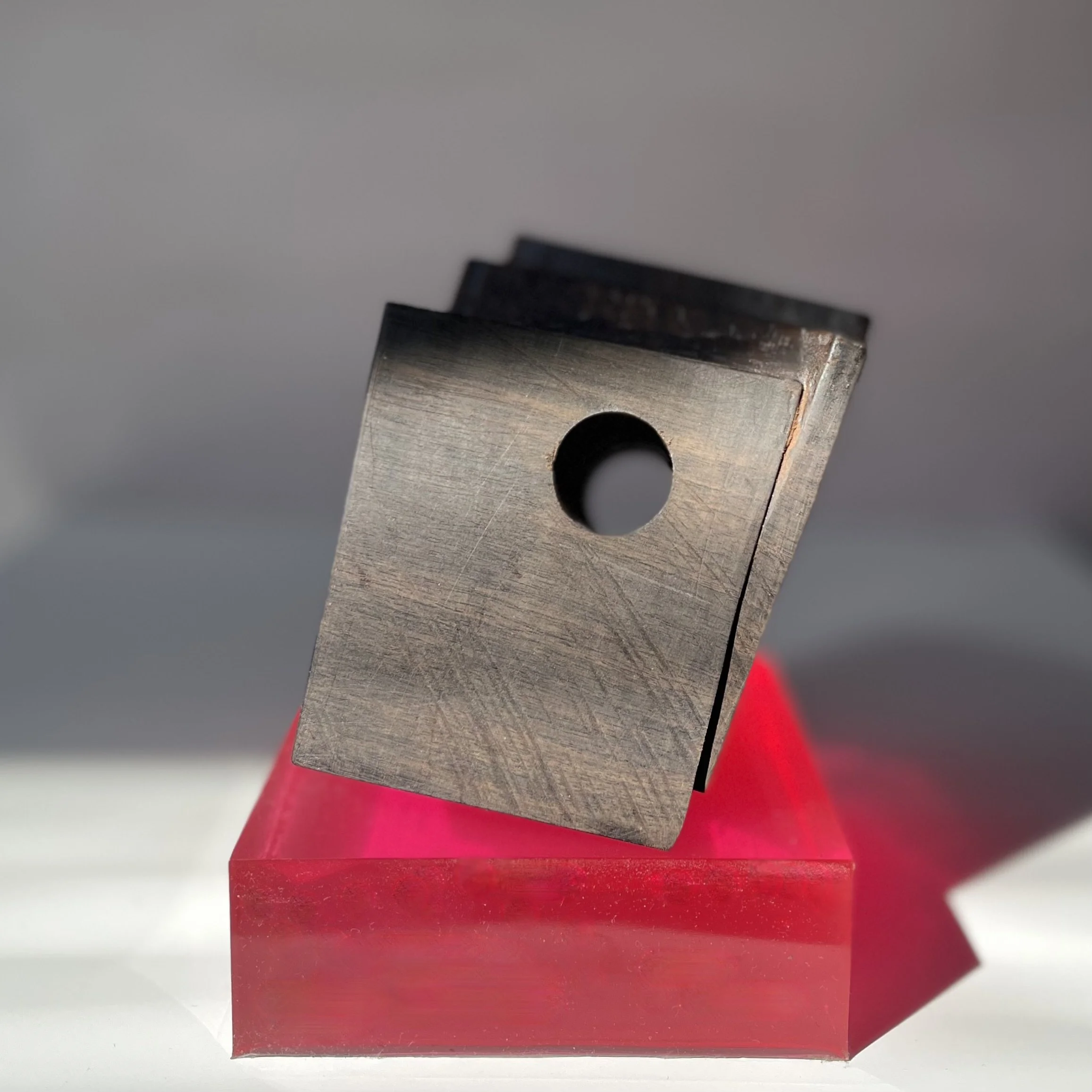
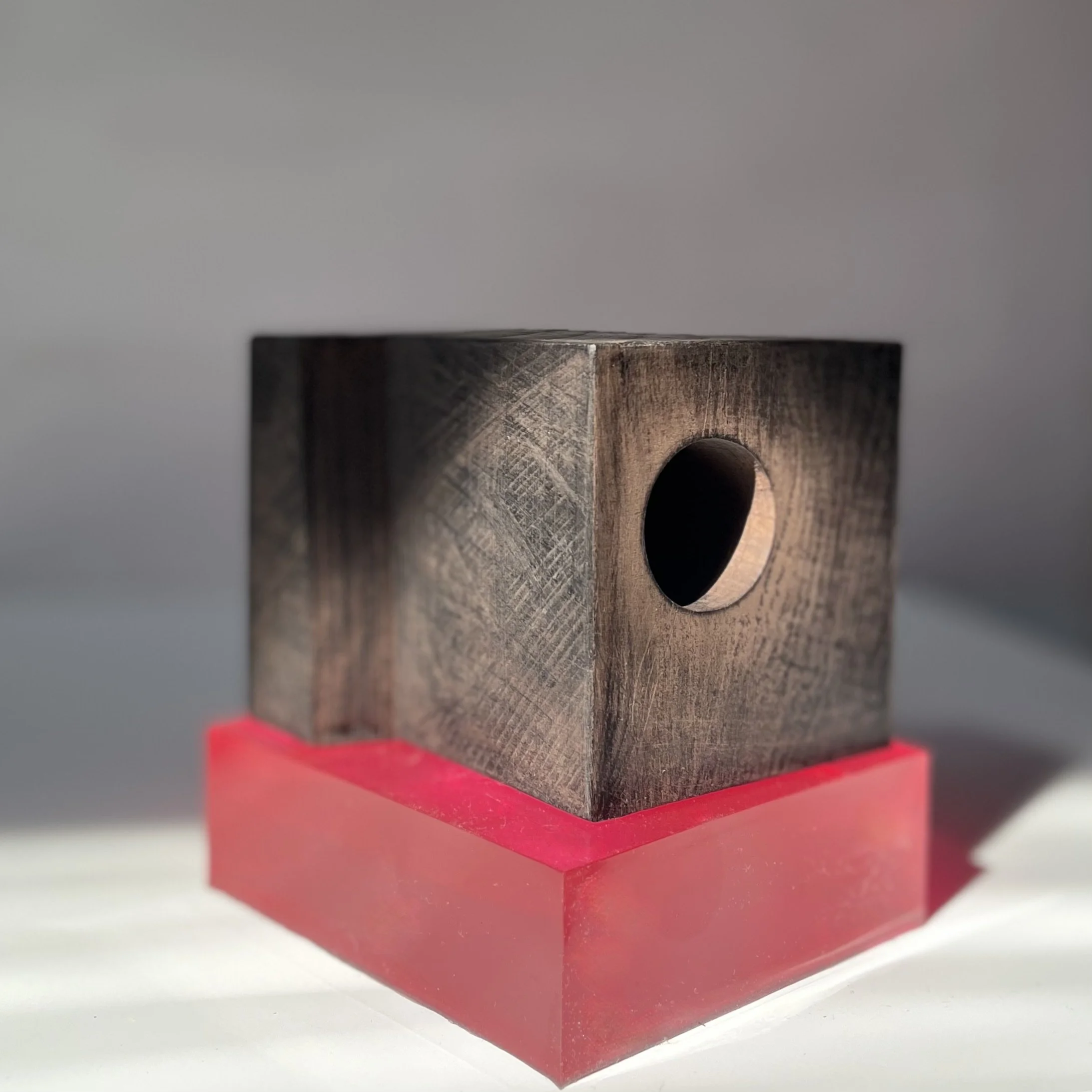
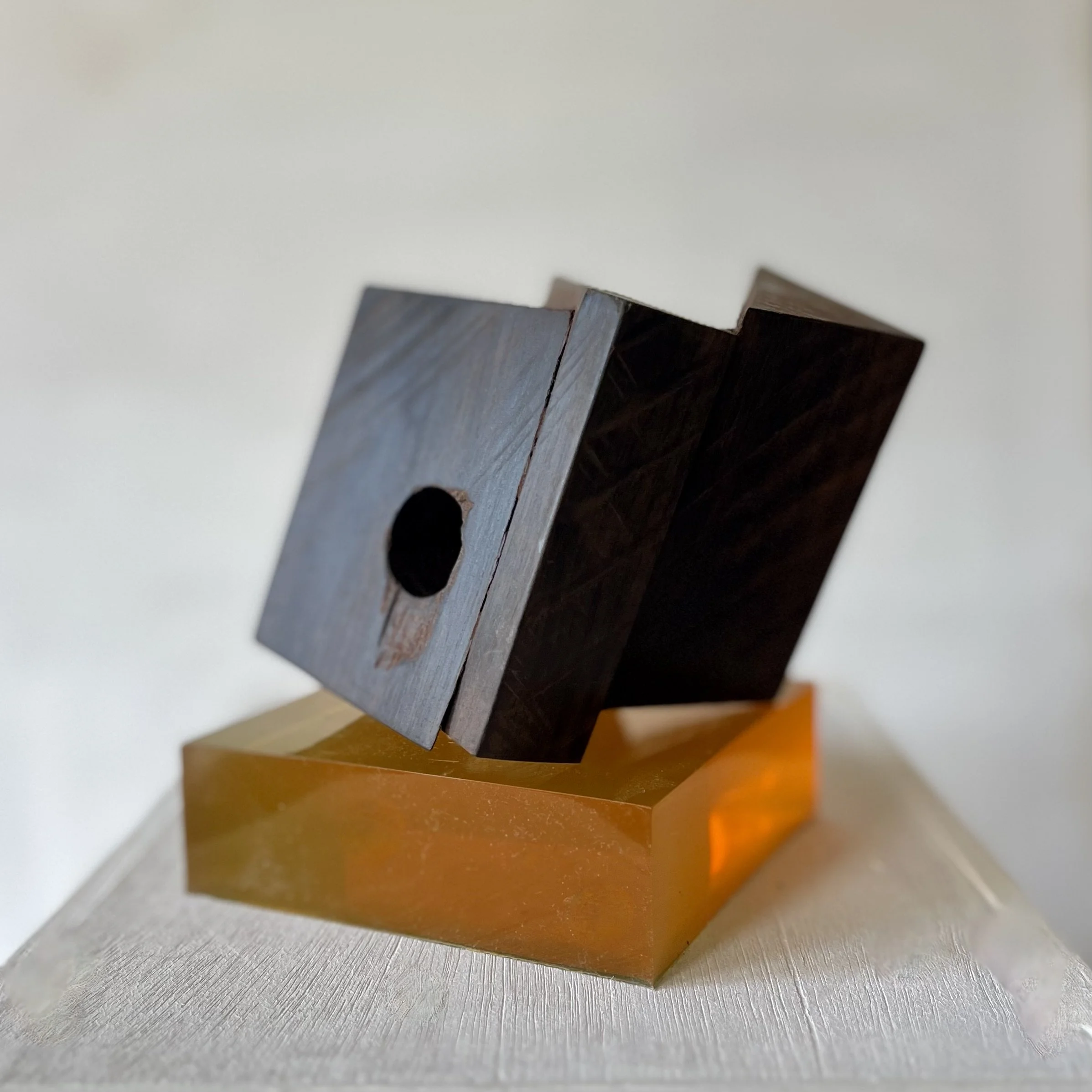
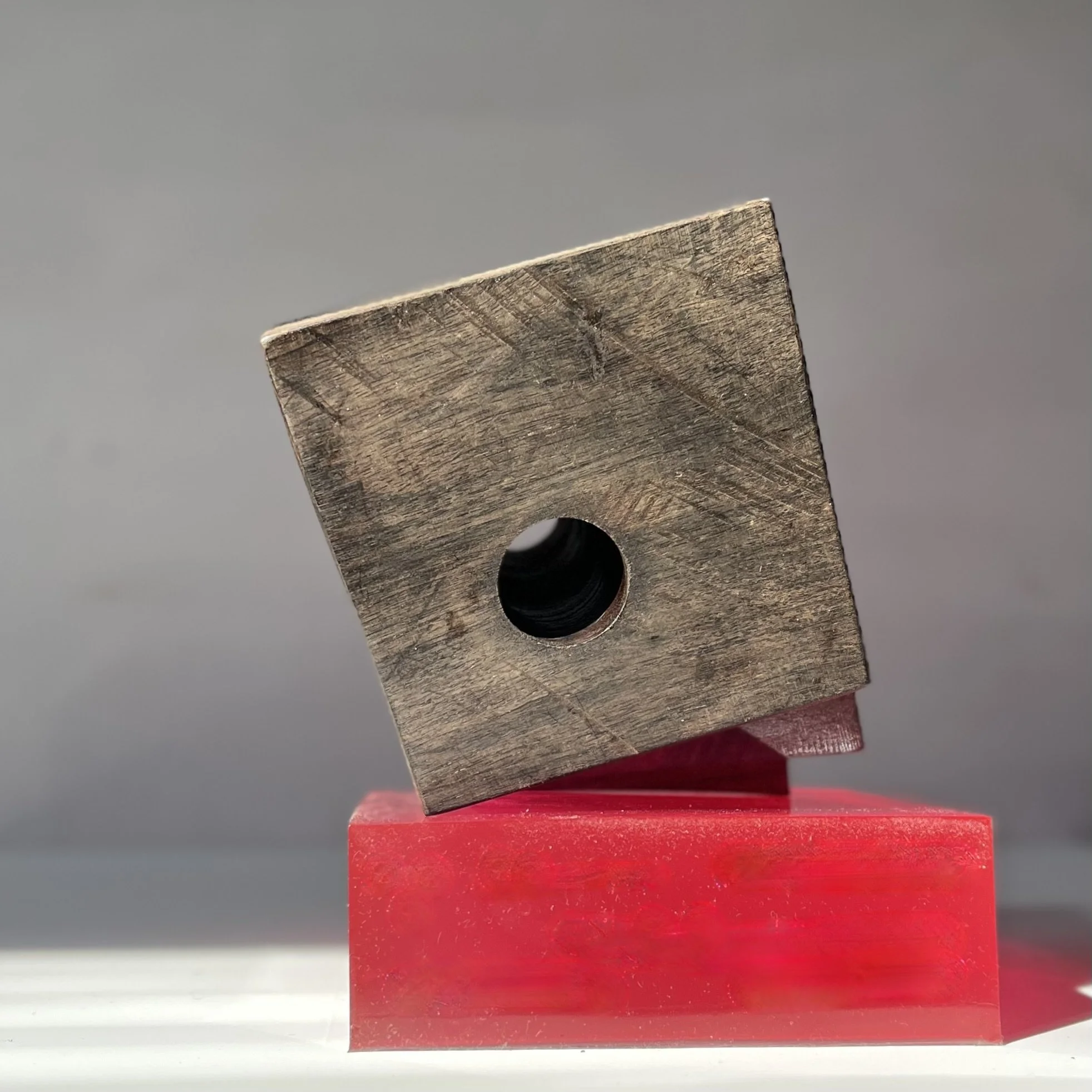
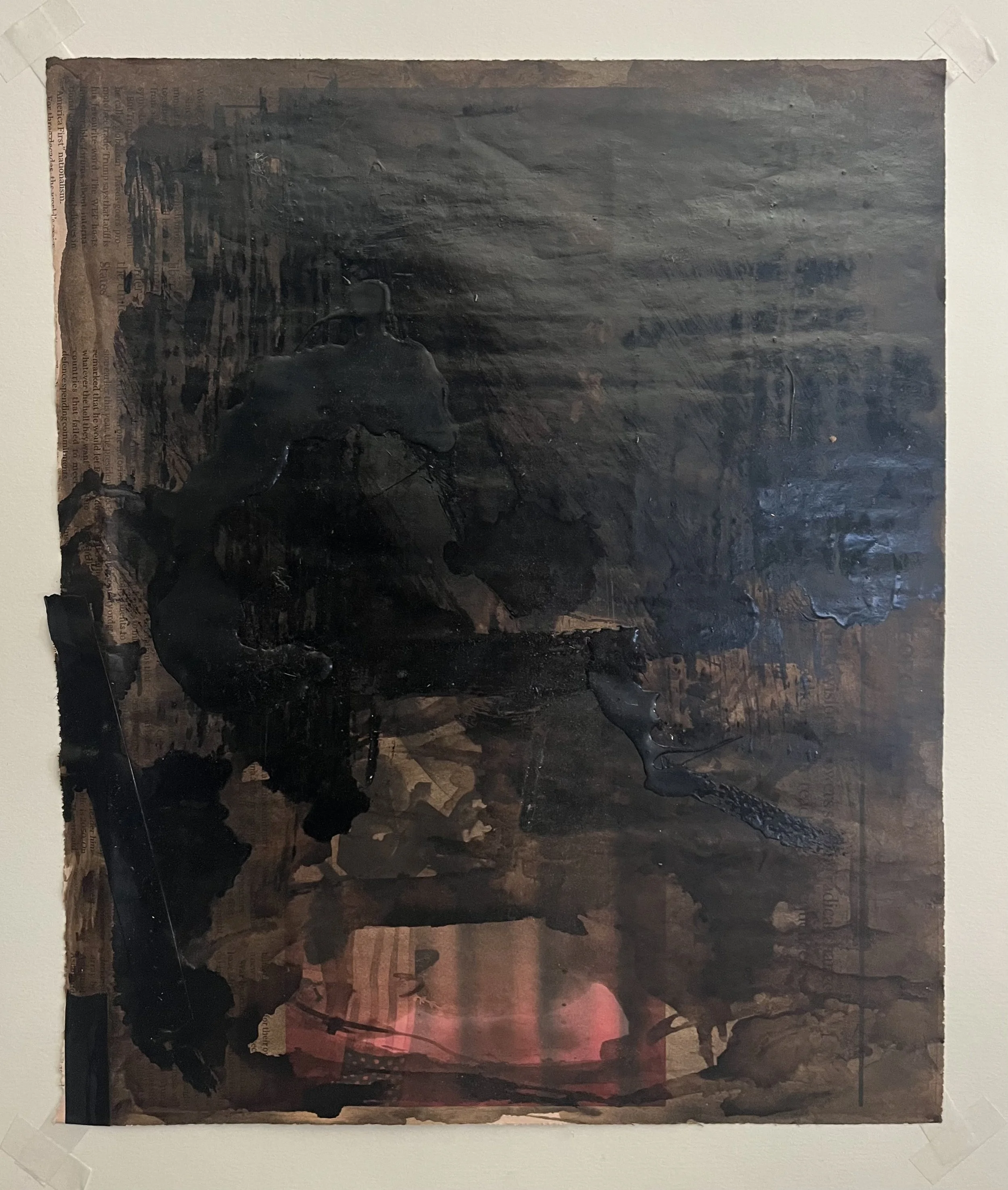
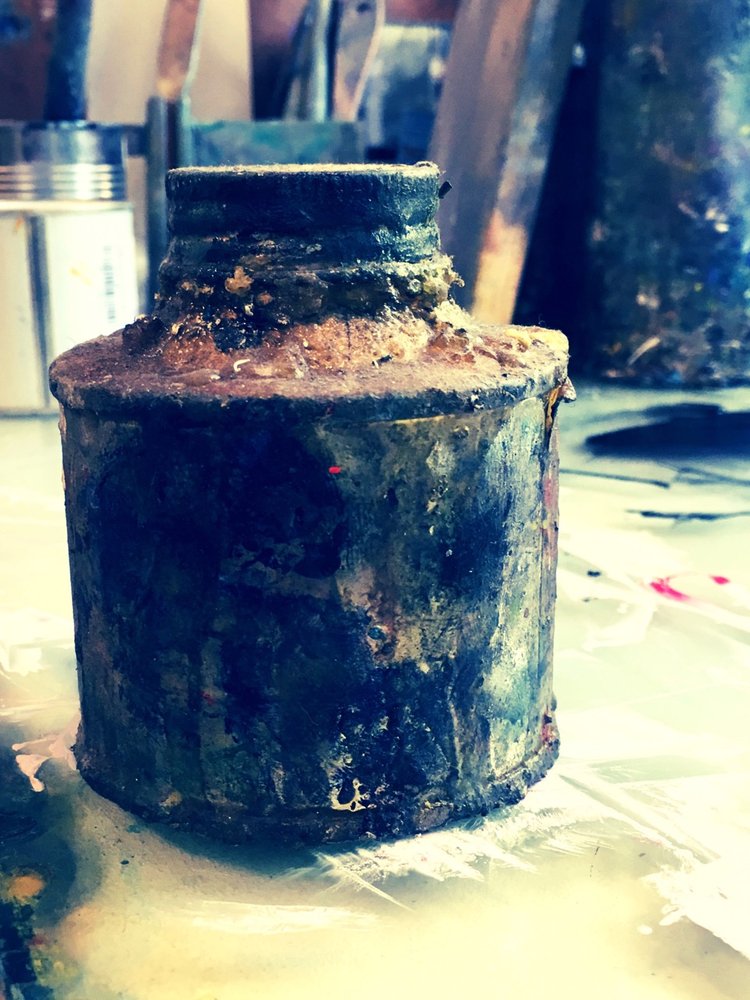
From “Dark Matter” series of works on paper
Curator’s Note:
Adit — Jonathan S. Hooper
[African Blackwood and resin]
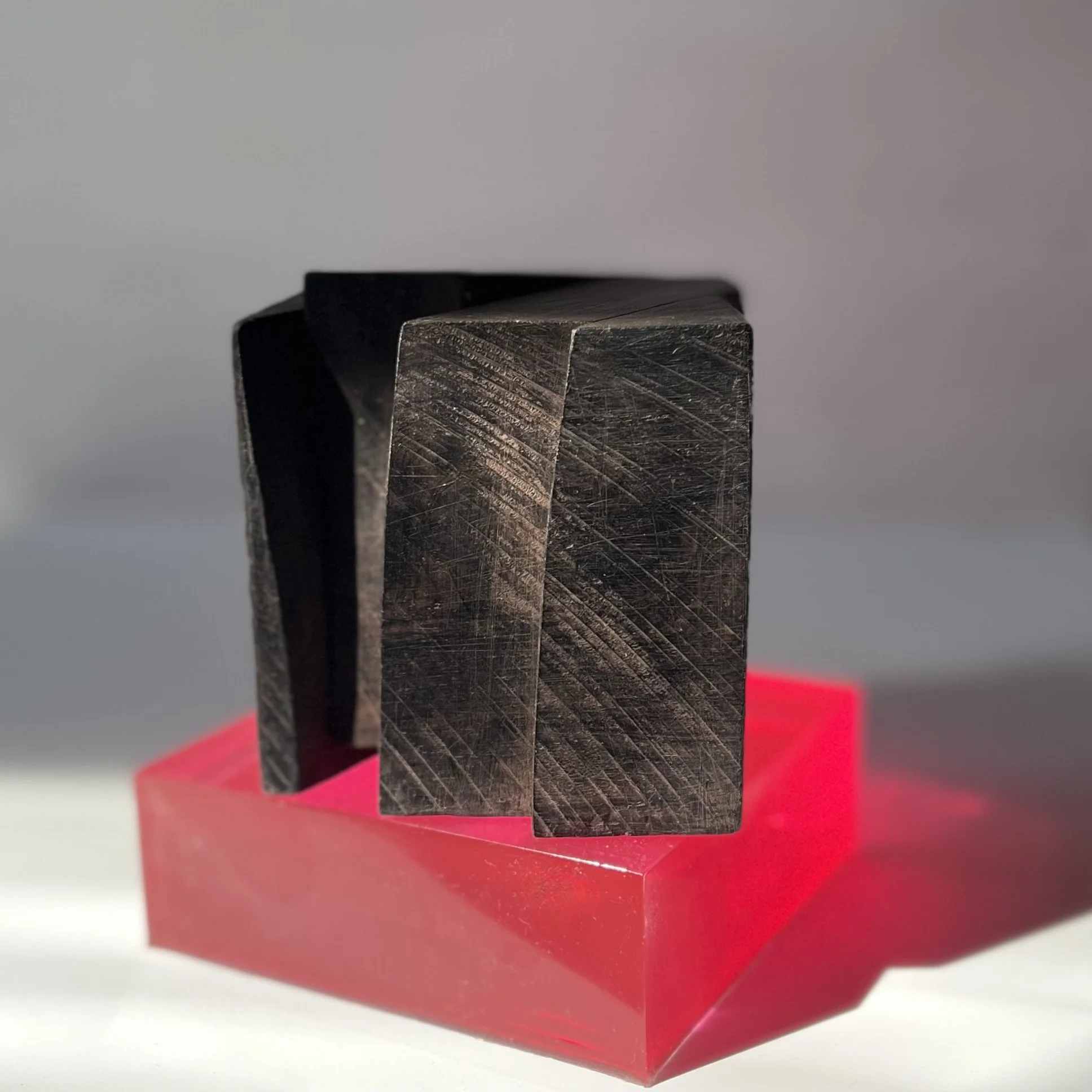
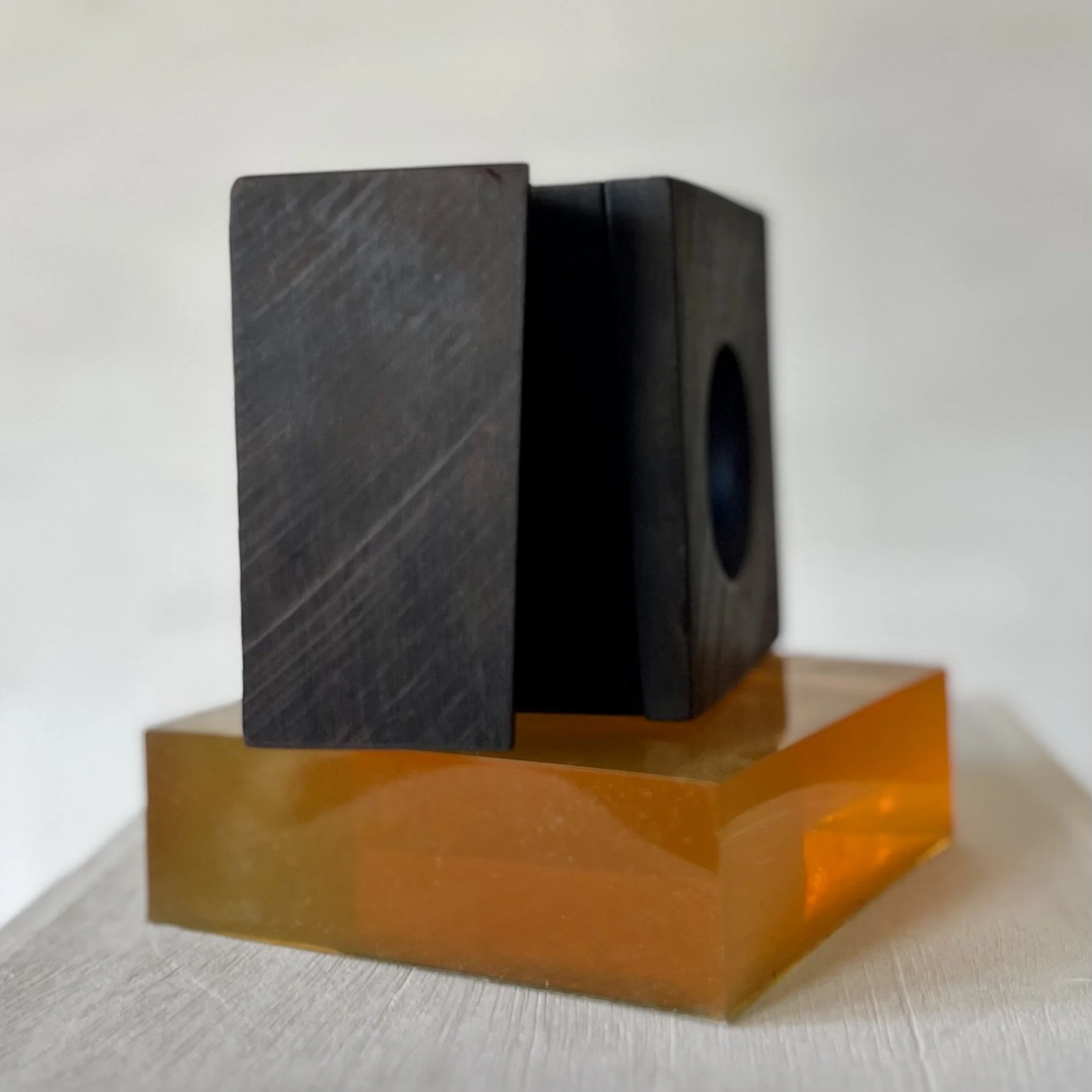
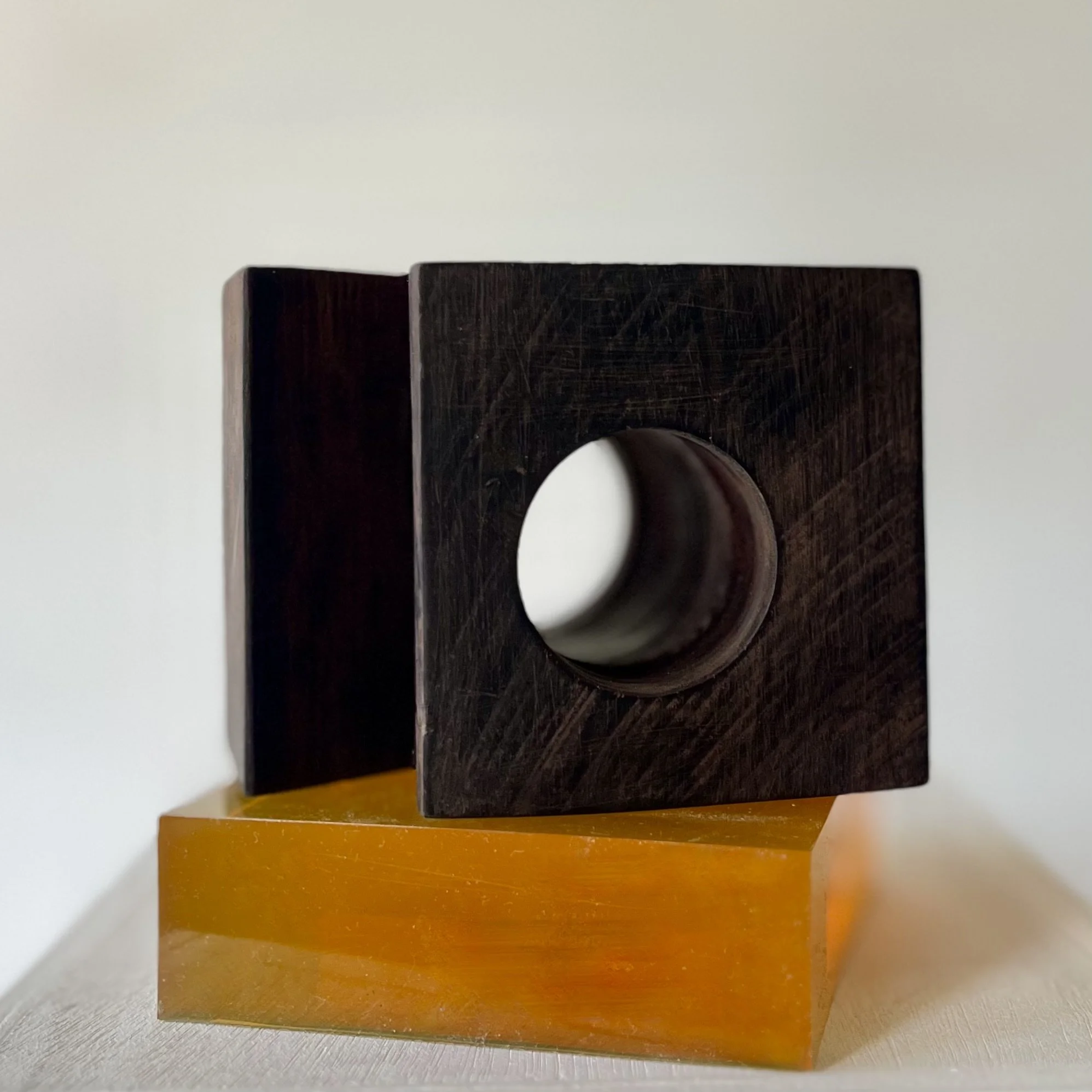
In Adit, Hooper introduces a series of deconstructed, "Platonic" cube sculptures that function simultaneously as self-contained macquettes and blueprints for monumental, human-scale interventions. These works operate as profound philosophical inquiries into the interplay between formal geometry, material memory, and spatial displacement.
Tectonics and Thermodynamics
The series title—Adit—invokes the horizontal opening to a mine-working; a point of access and a means of illumination and ventilation. While conceptually grounded in the fractured, excavated landscape of Hooper’s native Cornwall, the work quickly ascends from regional narrative to confront a universal, cosmic absolute: the Second Law of Thermodynamics. Hooper establishes a palpable tension between the relentless, indifferent slide of the universe toward maximum entropy and humanity's heroic, yet ultimately futile, attempts to arrest this progression through mineral extraction and structure.
The misaligned planes of Adit capture what the artist terms "the momentary possibility of balance." They occupy a liminal threshold between systemic architecture and inevitable collapse, poetically illustrating that the apparent stasis of our structured world is merely an illusion born of our brief perception of time. By hollowing out the cube, Hooper captures the precise inflection point where the relative movement between the solid elements has paused, locking the shifting planes in a temporary reprieve from a universe in a perpetual state of flux.
The Fractured Cube and Quantum Architecture
By boring a central void through a fractured and reassembled geometry, Hooper systematically disrupts the absolute symmetry of the classical cube. This aperture acts as a site of physical and conceptual rupture, shifting the cube's planes to mirror a quantum reality. Here, the sculpture ceases to be a static object and instead becomes a probabilistic event. The stability we perceive is revealed to be a temporary, statistical anomaly.
The selection of African Blackwood (Dalbergia melanoxylon) casts the medium as an active intellectual participant in this dialogue. Renowned for its extreme density and historic role as a prized musical tonewood, the timber introduces a latent acoustic dimension. Hooper exploits this property to articulate a concept of "tuned space" wherein the central void becomes an acoustic chamber for silence, vibrating with the latent energy of a quantum vacuum. Furthermore, the light-absorbing darkness of the wood provides a direct physical continuum to Hooper's Dark Matter works on paper (example below left), evoking the unseen, fundamental energies that dictate the macro-structures of the cosmos.
Phenomenological Scale
By suspending these dense, dark geometries upon translucent, crystalline plinths, Hooper isolates the sculptural mass, staging a dramatic material duality. The pristine, transparent base acts as a visual anchor for the volatile, shifted and reworked geometries above, simultaneously ‘animating the void’ at the sculpture’s core and the negative space surrounding it.
Though intimate in their current iteration, the Adit sculptures possess an inherent architectural scalability. Conceived to harmonise with both raw natural topographies and structured urban environments, these future monumental forms invite a visceral, phenomenological encounter. Despite their patient, enigmatic stillness, they demand that the viewer engage into a field of shifted planes and confront the resonant gravity of space, time, and inevitable transformation.